
Introduction
When working on construction, automotive, or industrial projects, one question often comes up: Can a single material handle both fire safety and acoustic performance? The answer, in many cases, lies in class 0 Foam.
Unlike standard insulation or acoustic products, Impregnated Class 0 Foam is specifically engineered to meet strict fire regulations while also delivering reliable sound absorption. This makes it a practical solution for environments where safety and performance must go hand in hand.
In this article, we explore how this material works, where it performs best, and why it’s increasingly becoming a preferred option across industries.
What Exactly Is Class 0 Foam?
Class 0 Foam is a flexible, open-cell polyurethane foam that has been treated with a mineral compound. This treatment is what gives it its defining characteristic—a nil burn rate. In simple terms, it does not easily ignite and does not contribute to the spread of fire.
At the same time, Impregnated Class 0 Foam retains the natural flexibility and lightweight structure of foam, making it easy to install across a wide range of applications.
Key Material Features
-
Chemically stable and inert
-
Non-fibrous and non-dusting
-
Flexible for shaping and cutting
-
Safe to handle in different environments
These properties make it suitable not only for industrial use but also for commercial and transport applications.
Fire Resistance That Meets High Standards
Fire safety is often a top priority in modern design, especially in enclosed or high-risk areas. Class 0 Foam is specifically developed to meet these demands.
Why It Performs Well in Fire-Prone Areas
-
It does not support combustion
-
Maintains its structure under heat exposure
-
Helps reduce the risk of flame spread
Because of this, Impregnated Class 0 Foam is commonly used in:
-
Engine compartments
-
Generator housings
-
Industrial machinery spaces
-
Marine interiors
In such environments, even a small fire risk can have serious consequences, which is why this type of foam is highly valued.
Acoustic Capabilities: Reducing Noise Where It Matters
Beyond fire resistance, class 0 Foam is also known for its strong acoustic performance. Its open-cell structure allows it to absorb sound waves, reducing echo and improving clarity.
How It Handles Sound
-
Absorbs mid and high-frequency noise
-
Reduces reverberation inside enclosed spaces
-
Improves overall sound quality
Impregnated Class 0 Foam is particularly effective in noisy environments such as:
-
Engine rooms
-
Heavy vehicles
-
Industrial production areas
For applications requiring enhanced performance, high-density versions provide even better sound absorption
Designed for Complex Surfaces and Tight Spaces
Not all materials can adapt to irregular shapes, but class 0 Foam excels in this area. Its flexibility allows it to fit into curved surfaces and complex structures without losing effectiveness.
Practical Advantages
-
Easy to cut and shape
-
Fits around pipes, panels, and machinery
-
Suitable for both flat and curved installations
This adaptability reduces installation time and ensures better coverage, especially in technically demanding projects.
Different Forms to Suit Different Needs
One of the reasons Impregnated Class 0 Foam is widely used is its availability in multiple formats.
Common Supply Options
-
Flat sheets for wall and panel applications
-
Rolls for large surface coverage
-
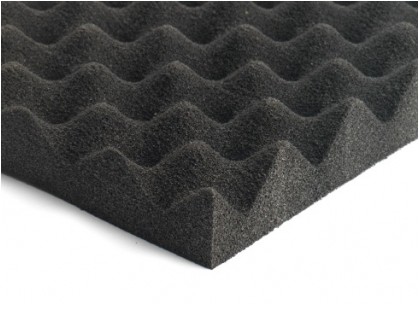
Profiled foam for enhanced acoustic absorption
-
Foam with protective facings
It can also be combined with additional materials such as:
-
Foil layers for heat resistance
-
Polymeric barriers for improved sound insulation
-
Damping sheets to reduce vibration
This versatility allows engineers and designers to tailor the foam to specific project requirements.
Comparing Class 0 Foam with Standard Acoustic Foam
While both materials are used for sound control, there are important differences between standard acoustic foam and class 0 Foam.
Standard Acoustic Foam
-
Focuses mainly on sound absorption
-
Often lacks fire-resistant properties
-
Suitable for low-risk environments
Impregnated Class 0 Foam
-
Combines acoustic performance with fire safety
-
Suitable for high-risk industrial applications
-
Offers greater durability and compliance
This makes class 0 Foam a more advanced and reliable option where safety cannot be compromised.
Where You’ll Commonly See Class 0 Foam in Use
Construction and Building Projects
In commercial buildings, class 0 Foam is used to control noise while meeting fire safety regulations, especially in plant rooms and service areas.
Automotive Applications
Vehicle interiors, including headliners and cabin panels, benefit from Impregnated Class 0 Foam due to its sound absorption and safety features.
Marine Environments
Boats and ships require materials that can withstand heat and confined conditions, making this foam a suitable choice.
Industrial Settings
Factories and processing plants use class 0 Foam to manage machinery noise and enhance workplace safety.
Installation Best Practices
To maximize the performance of Impregnated Class 0 Foam, proper installation is key.
Tips for Better Results
-
Cover at least 20–30% of surfaces for noticeable acoustic improvement
-
Focus on corners and reflection points
-
Use self-adhesive backing or appropriate adhesives
-
Ensure surfaces are clean before application
These simple steps can significantly improve both acoustic and safety outcomes.
Benefits of Using Class 0 Foam
Choosing class 0 Foam offers a range of practical benefits:
-
Fire Protection: Reduces risk in high-temperature environments
-
Noise Reduction: Improves acoustic comfort
-
Ease of Use: Flexible and simple to install
-
Safety: Non-toxic and non-fibrous
-
Sustainability: Free from harmful CFC and HCFC gases
These advantages make Impregnated Class 0 Foam a dependable option across multiple industries.
Are There Any Limitations?
While class 0 Foam performs well in many areas, it’s important to understand its scope.
-
It reduces echo but does not completely block sound transmission
-
Low-frequency noise may require additional solutions
-
Long-term exposure to moisture or UV can affect durability
For full soundproofing, it is often combined with other materials like dense barriers or specialized panels.
Why It’s a Smart Investment for Modern Projects
Today’s projects demand materials that deliver multiple benefits without increasing complexity. Impregnated Class 0 Foam answers that need by combining safety, flexibility, and acoustic efficiency in a single solution.
It simplifies design decisions while ensuring compliance with safety standards—something that is increasingly important in both commercial and industrial environments.
Conclusion
So, is class 0 Foam the right choice? If your project requires both fire resistance and effective sound control, the answer is a strong yes.
With its unique ability to resist combustion, absorb sound, and adapt to complex surfaces, Impregnated Class 0 Foam offers a balanced solution for modern challenges. Whether used in construction, automotive, marine, or industrial settings, it continues to prove its value as a reliable and forward-thinking material.
